


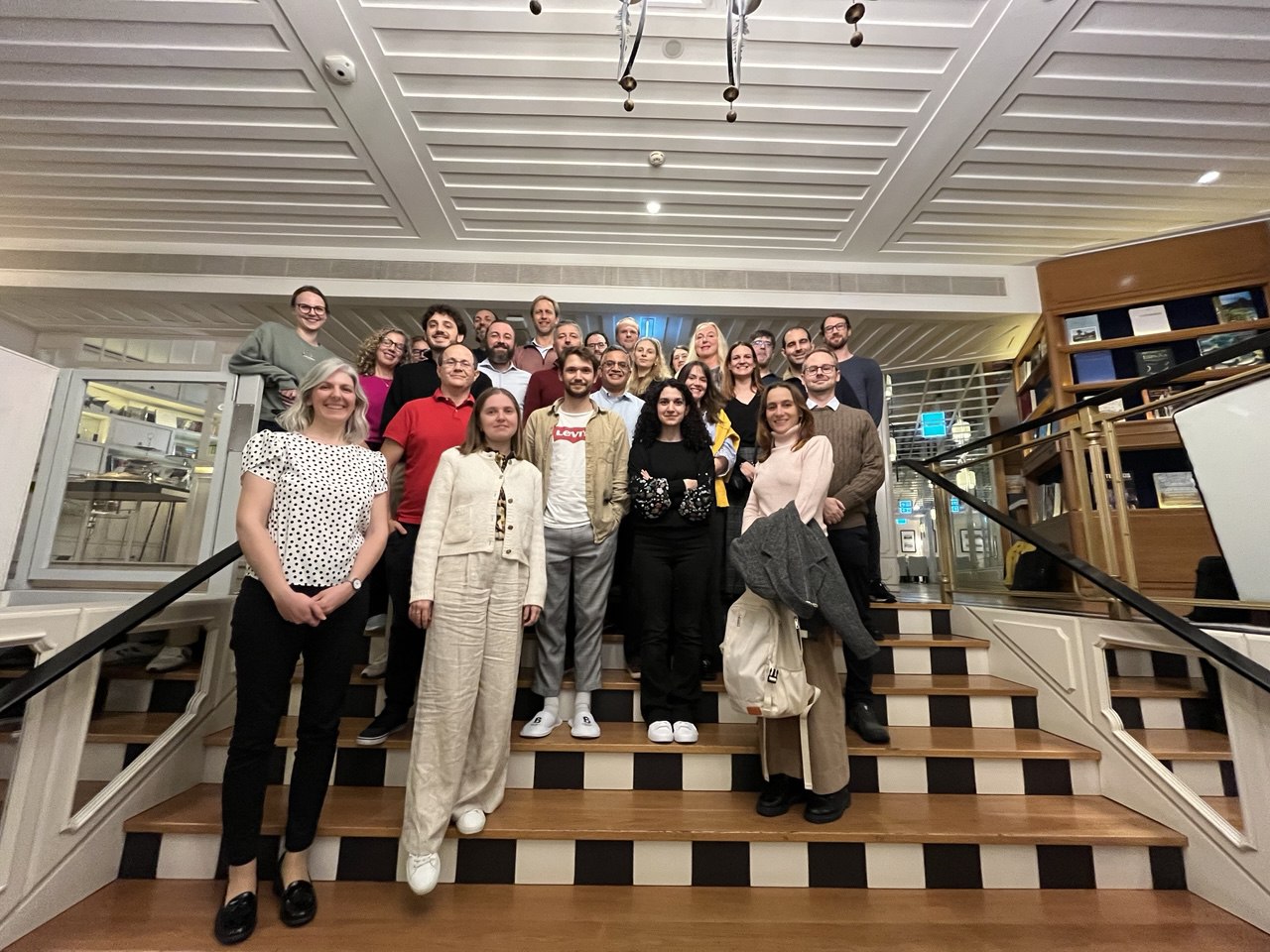
Insights into the General Assembly of the “dAIbetes” Research Project in Lisbon
Collaboration within the Horizon Europe project “dAIbetes” continued with the second General Assembly Meeting, held on 13 and 14 November 2025 in Lisbon. The Research Institute was represented by Madeleine Müller, Walter Hötzendorfer and Georg Fröwis.
Background to the project
Type 2 diabetes afflicts nearly one in ten adults worldwide, making the development of personalised treatment approaches increasingly important. The “dAIbetes” project explores the use of virtual twins as innovative prognostic tools for personalised disease management. However, as training these models is a data hungry endeavour and therefore falls directly within the scope of the General Data Protection Regulation (GDPR), the project focuses on more privacy-enhancing computational technologies such as federated learning. For more information about the project, kindly click here.
Collaboration as a Key to Success
To ensure the success of the project, experts from various fields (including medicine, engineering, cyber security, law and ethics) work closely together in an interdisciplinary manner to tackle complex challenges. For the Research Institute, the project offers a particular research interest in current developments related to data protection law, the AI Act, and the European Health Data Space (EHDS). As already demonstrated during previous meetings, the consortium once again showed in Lisbon that its interdisciplinary composition and constructive working atmosphere create essential synergies that significantly advance the overall project. The General Assembly Meeting was complemented by a workshop with the “AI4LUNGS” project.
Project Progress
The project’s developments so far are assessed positively, and the areas of medicine and technology are becoming increasingly interconnected. From the perspective of the Research Institute, we are pleased that fundamental rights, data protection and ethics are not seen by our partners as mere regulatory requirements, but as integral principles of the project itself, aimed at protecting privacy and health data. Given the long-term nature of the project and the dynamic evolution of AI in recent years, we are motivated to continue addressing the upcoming legal and ethical challenges throughout the project.