


Digital labour and rights at the Digital Humanism Conference 2026
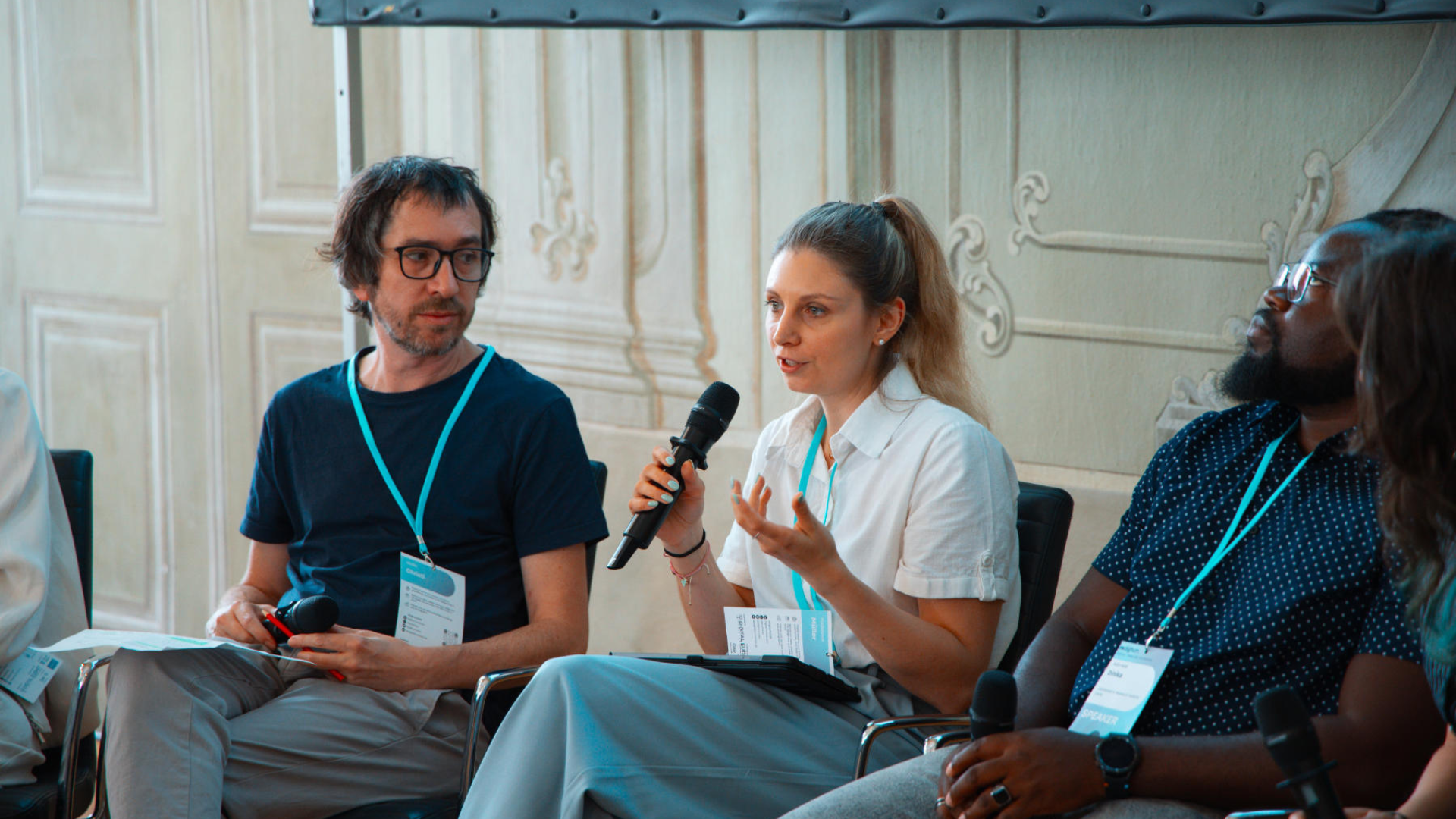
From 24 to 26 June 2026, the Digital Humanism Conference, DigHum 2026, took place at the Austrian Academy of Sciences under the theme “Orientation in turbulent times”. Our colleague Madeleine Müller participated as a panelist in the session “Digital Labour: power, rights, and control”. Drawing on her expertise in digital rights, data protection, artificial intelligence, and automated decision-making, she contributed legal aspects to the discussion and presented initial insights into our new project on digital rights in the workplace.
The session opened with a keynote by the Distributed AI Research Institute (DAIR), which centred on the experiences of data workers engaged in data annotation, content moderation, and other forms of data-related labour. Their work is essential to the development and operation of contemporary AI systems, yet it is frequently outsourced, performed under precarious conditions, and remains largely invisible to many users of AI applications. Building on these perspectives, the panel explored how data infrastructures, platforms, and algorithmic management systems reshape labour relations and structures of power. Moderated by Helene Baumgartner and Tünde Fülöp from the Vienna Chamber of Labour, the discussion brought together Camilla Salim Wagner and Adio-Adet Dinika from DAIR, Wolfie Christl from Cracked Labs and Madeleine Müller to examine transparency, workplace surveillance, algorithmic management and the practical enforcement of workers’ rights.
In her contribution, Madeleine Müller explained that digital rights in the employment context are grounded in existing data protection rights, other fundamental rights, and labour law guarantees. These include the rights to privacy, data protection, and non-discrimination, the right to fair and just working conditions, rights to information, human review of automated decisions, and collective rights. These guarantees become particularly important where AI-based systems monitor, evaluate, or influence employees and shape decisions concerning work allocation, performance assessment, promotion, or disciplinary measures. Digital rights translate established legal protections into data driven working environments and help ensure that workers can exercise their rights effectively under digital conditions.
The discussion also highlighted that the formal applicability of rights is often insufficient to ensure effective protection in the workplace. Workers and their representatives need operational procedures through which they can obtain information, understand how decisions are made, and request meaningful human review. Works councils, trade unions, data protection authorities, courts, and other supervisory bodies therefore have a central role. Relevant legal foundations can be found in the General Data Protection Regulation, the AI Act, the Platform Work Directive, and the Austrian Labour Constitution Act. Their practical enforcement remains challenging because the applicable rights are distributed across several legal instruments, institutions, and procedures, while many workers are unaware of the specific rights and remedies available to them. Madeleine Müller therefore emphasised the fundamental importance of transparency, accessible information, and effective support structures for the deployment of AI in the workplace in a manner consistent with fundamental rights.
We would like to thank the organisers for the excellent organisation and all participants for the open, insightful, and thought-provoking exchange.
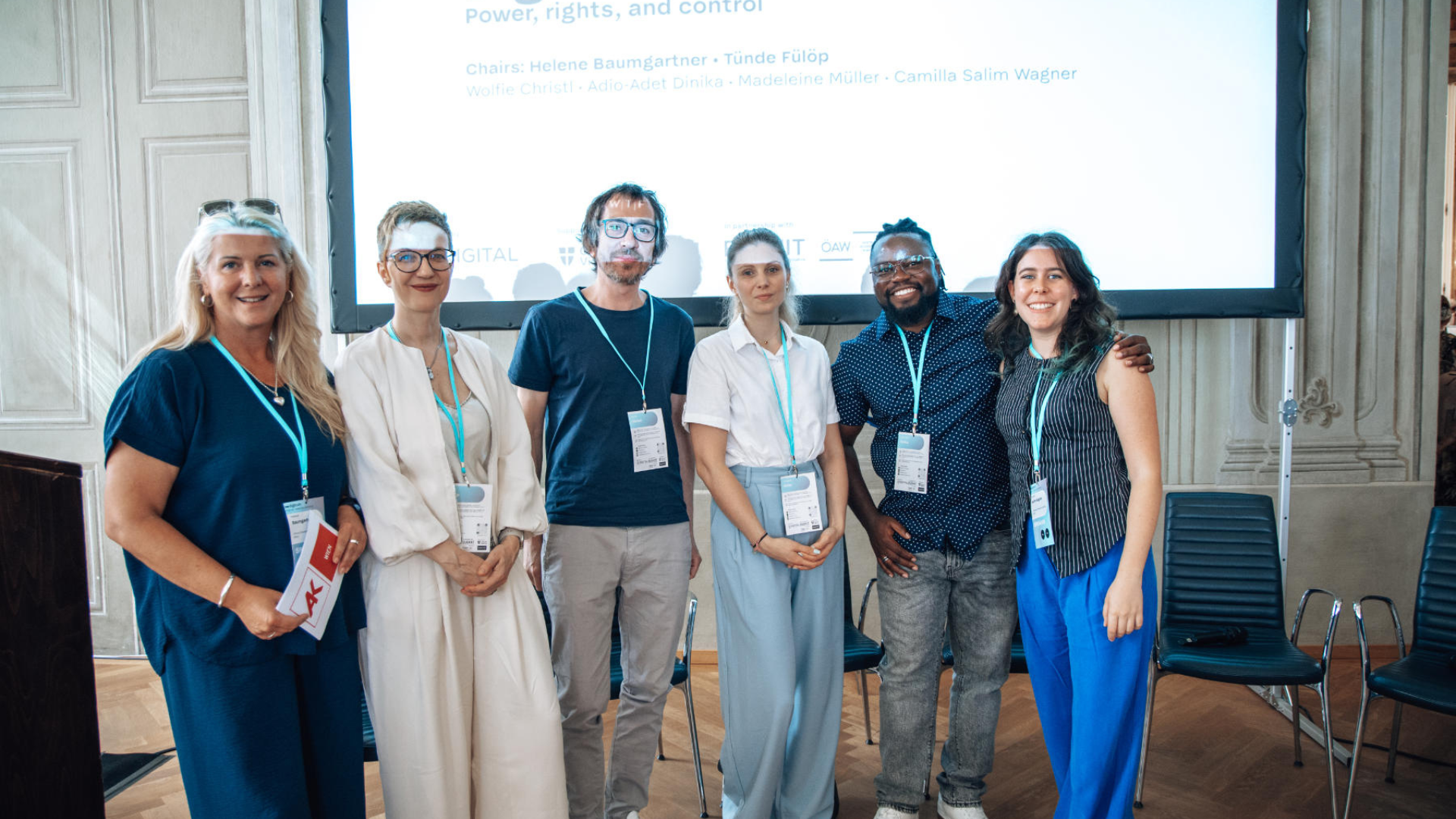
F.l.t.r. Helene Baumgartner, Tünde Fülöp, Wolfie Christl, Madeleine Müller, Adio-Adet Dinika, Camilla Salim Wagner
Image credit: © swype/Verein zur Förderung des digitalen Humanismus. This credit also applies to the featured image.